Bedding guide
Inside St. Geneve’s Utopia Duvet: Fill, Shell, and Care
Eiderdown, silk jacquard and careful internal construction give the Utopia Duvet its distinctive character. Here’s what those materials mean in everyday use—and why its dry-clean-only label deserves a place in the decision.
Published October 15, 2026
The word “Utopia” sets an ambitious expectation for a duvet. The appeal here is less about flashy details than a considered combination of materials: eiderdown fill, a German-woven silk jacquard shell and a baffle-box construction intended to keep the fill arranged evenly. Corner loops help connect the duvet to its cover, while the care instructions make clear that this is not a casual, toss-it-in-the-washer kind of bed layer.
Those features make the Utopia interesting to anyone comparing luxury bedding, but they also prompt practical questions. What is eiderdown, and how does it differ from more familiar goose or duck down? What does a silk jacquard shell contribute? And how much does a dry-clean-only requirement change the experience of owning a duvet?
This guide looks closely at the materials and construction described for the Utopia Duvet, then translates those specifications into everyday considerations. The goal is not to declare one fill universally best, but to help readers understand what they are choosing—and what to confirm before purchase.
What makes eiderdown distinctive?
Eiderdown is the soft insulating down associated with eider ducks. Down consists of light, three-dimensional clusters that trap still air; that trapped air helps slow the transfer of heat. It is different from feathers, which have a central shaft and a flatter, more structured shape. In bedding, the distinction matters because down clusters can create loft without the same weight or rigid feel of feather fill.
Eiderdown has a particular reputation in the world of fine bedding. Its association with Iceland and other northern regions adds a natural-history dimension to the material, while its rarity and specialist handling have made it a premium fill. That reputation should not be mistaken for a guarantee that every duvet using the word “eiderdown” will feel the same. The quality and behavior of a finished comforter depend on the fill, its preparation, the amount used, the shell, and the construction around it.
For the Utopia Duvet, the listed fill is eiderdown. The available specifications do not state a fill-power figure, fill weight, or a detailed warmth rating. Those details are useful when comparing comforters, so it is sensible to ask the retailer or manufacturer for the exact product information rather than infer it from the name alone. Fill power, where provided, describes the volume occupied by a given weight of down under a testing method; it is not, by itself, a complete measure of how warm a particular duvet will feel.
Comfort is personal, too. A person who sleeps warm in a well-heated room may want a different weight from someone who keeps the bedroom cool. A duvet’s warmth depends on fill quantity and distribution, cover fabric, room temperature, sleepwear and individual preference. If you are comparing products, treat “luxury,” “lofty” and similar descriptions as invitations to look for concrete specifications—not substitutes for them.
The silk jacquard shell: more than a finish
The Utopia Duvet is described as having a 434-thread-count, German-woven silk jacquard shell. Silk is prized for its smooth hand and refined surface, while jacquard refers to a woven pattern structure rather than a printed design. Together, the terms suggest a shell chosen for both tactile appeal and a polished appearance.
A shell also has a practical job. It encloses the fill, helps contain it and forms the layer that rests against the duvet cover. The way a fabric is woven, its weight and its finish can influence how a duvet drapes and feels. The shell is not merely decoration, even when its visual texture is part of the product’s appeal.
Thread count is often treated as a shorthand for quality, but it does not tell the whole story. Fiber type, yarn, weave, finishing and overall fabric construction all contribute to how a textile performs. A high number alone cannot establish that a fabric will be more comfortable or longer-lasting. With a silk jacquard shell, the fiber and woven structure are central details in their own right.
Silk also brings care considerations. The Utopia Duvet is specified as dry clean only, a direction that aligns with a delicate shell and a filled construction that may not respond well to routine home laundering. Owners should follow the care label for the exact duvet they receive; general advice for washable down products should not override the manufacturer’s instructions.
Baffle-box construction and why it matters
Inside a duvet, the fill needs room to loft while remaining reasonably well distributed. The Utopia uses 12-inch baffle-box construction. In a baffle-box design, internal fabric walls separate sections while creating space for the fill to expand. That structure helps limit migration from one area to another and can support a more even spread across the duvet.
Even distribution is more than a neatness issue. If fill gathers in one area and thins in another, a sleeper may notice uneven loft or cooler patches. Baffles are designed to help manage that movement, although no construction can make a duvet entirely immune to shifting through normal use. Gentle shaking and careful handling can help restore an orderly appearance between uses.
The listed design also includes corner loops. These attach to ties inside a duvet cover, helping the insert stay positioned as the cover is made, turned or adjusted during the night. It is a small detail with a clear practical benefit: a secure connection can reduce bunching and the need to re-center the duvet regularly.
Piped edging and corner silks are also listed in the product construction. These finishing elements contribute to the duvet’s tailored edges and help provide defined points for fastening. Because the duvet is meant to be used inside a cover, the most important test is straightforward: check that the cover has compatible interior ties and that the size of the insert matches the cover. A well-made duvet can still shift if its cover is too large or lacks attachment points.
What dry-clean-only care means at home
The clearest practical distinction between the Utopia and many everyday comforters is its care instruction: dry clean only. That means routine household washing is not the recommended maintenance route. A large, filled duvet can be difficult to clean and dry evenly in domestic equipment, and moisture left inside the fill can create problems. With a silk shell, unsuitable washing can also affect the fabric’s appearance or feel.
For daily use, the best first line of protection is a duvet cover. It acts as a washable barrier against body oils, dust and ordinary contact, reducing how often the insert itself needs professional attention. Choose a cover that fits well and fastens securely to the corner loops. Launder the cover according to its own label rather than assuming its instructions apply to the duvet inside.
Air the duvet occasionally in a clean, dry space if the care instructions permit. Avoid direct, prolonged sun exposure, damp conditions and rough handling. If a spill or stain occurs, do not soak or aggressively scrub the affected area. Check the manufacturer’s guidance and consult a cleaner experienced with silk-covered, down-filled bedding. A professional can advise whether the issue needs spot treatment or full cleaning.
Before sending the duvet for service, tell the cleaner what it is made of and show the care label. Not every dry cleaner has experience with high-value down bedding or silk jacquard, so asking about their relevant experience is worthwhile. Keep any care documentation and product labels, especially when warranty terms or service recommendations may depend on them.
Storage deserves equal attention. When the duvet is not in use, it should be clean and fully dry, then stored in a breathable fabric bag or cotton cover in a dry place. Avoid sealing it in plastic for long periods, since trapped moisture can be unwelcome in natural-fiber bedding. Do not compress it under heavy objects; preserving loft means allowing the fill space rather than forcing it into a permanently flattened state.
Is a specialist duvet right for your routine?
A luxury duvet is not judged only by how it feels on the first night. Its materials, maintenance and fit have to suit the household using it. The Utopia’s silk shell and eiderdown fill may appeal to someone who values natural materials and a refined finish. Its construction details may also matter to sleepers who want an insert designed to keep its fill arranged and attached inside a cover.
But the care requirement is a genuine part of the product, not fine print to ignore. If you prefer bedding that can be washed at home whenever needed, a dry-clean-only duvet may not fit your habits. Professional cleaning involves planning and cost, and the appropriate frequency depends on use, protection and the manufacturer’s guidance. A consistently used duvet cover can make that routine more manageable, but it does not turn the insert into a machine-washable product.
Temperature preference matters just as much. The available specifications do not provide a precise warmth classification or fill weight for this model. People who sleep hot, share a bed with someone who prefers a different temperature, or keep the bedroom at a particular setting should seek those specifics before deciding. If the manufacturer offers multiple weights or configurations, compare them directly; do not assume the name alone identifies a suitable season or climate.
Allergy concerns deserve careful, individual consideration. The product information identifies eiderdown fill, but no bedding label should be treated as a substitute for medical advice or a personal assessment of sensitivities. If you have a known allergy or respiratory concern, review the exact materials and cleaning requirements with a qualified healthcare professional and the seller before bringing the duvet into your home.
Questions to ask before choosing
A few specific questions can turn an elegant product description into a useful buying decision. The listed construction explains the materials and care approach, but some details are not provided in the available specifications. Ask for current, model-specific answers and compare like with like.
- What are the size and finished dimensions? Confirm that the duvet will fit your bed and the cover you intend to use.
- What warmth level and fill weight are offered? These details help you assess suitability for your room and personal sleep temperature.
- What does the eiderdown sourcing information cover? Request documentation about origin and any relevant sourcing or welfare certifications rather than relying on broad claims.
- How should stains and routine professional cleaning be handled? Confirm the manufacturer’s current instructions and choose a cleaner experienced with this construction.
- Does your duvet cover have interior ties? The corner loops are useful only if the cover can attach to them.
- What warranty or repair support applies? Check the terms for the exact item and keep proof of purchase and labels.
For readers comparing related bedding, the [Utopia Duvet product listing](/products/utopia-duvet-3353) provides the available product-specific details, including its eiderdown fill, silk jacquard shell, baffle-box construction and dry-clean-only care. Confirm current specifications and availability with the retailer before making a decision.
A note on product naming and attribution
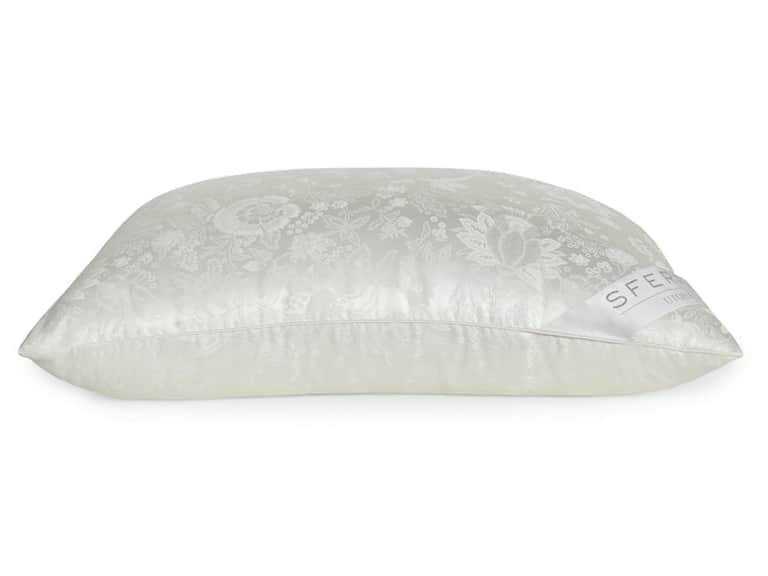
Luxury bedding names can overlap across collections, brands and product types. “Utopia” may appear in the name of more than one item, and a related pillow is not automatically identical to a duvet bearing the same collection name. The information available for the duvet describes its materials and construction but does not establish every detail of brand attribution or sourcing.
For clarity, confirm the maker and exact model on the product label, invoice and current retailer listing. This is especially useful when researching care instructions, warranty coverage or sourcing claims: those should be tied to the specific duvet, not inferred from a similarly named pillow or another item in a collection.
The takeaway: refinement comes with responsibility
The Utopia Duvet brings together materials and construction that invite a closer look: eiderdown for lightweight insulation, a German-woven silk jacquard shell, 12-inch baffle boxes to help organize the fill and corner loops to secure it inside a duvet cover. Each detail has a purpose, from the feel of the outer fabric to the way the insert sits on the bed.
Its dry-clean-only instruction is just as defining as the silk and down. This is a duvet for someone prepared to protect it with a cover, follow the label and arrange suitable professional care when needed. That routine may be a reasonable trade-off for a sleeper drawn to its materials and refined finish; for someone who prioritizes easy home laundering, it may be a mismatch.
In the end, an informed choice is less about the romance of a product name and more about the facts behind it. Verify the warmth, fill weight, dimensions, sourcing details and care guidance for the exact model. Then weigh those details against your bedroom, your habits and the kind of comfort you want night after night.